What Others Are Saying

Story of Transformation | an unexpected journey to bring the gospel home

Mitch Craig is part of our twelfth church planter cohort (2026-2027). Here’s a bit of his journey from sensing God’s call to plant to their first service.
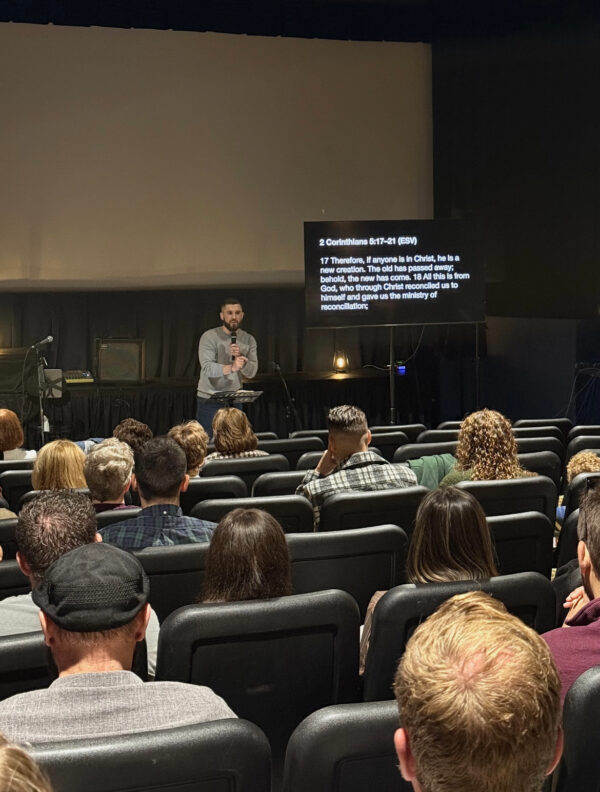
Every believer has a running list of family members, friends, and neighbors they pray will one day come to know Jesus. As Mitch Craig started gathering a group to help launch The Vine Church in his hometown of Milford, MI, he saw those very prayers answered in real time.

Mitch welcomed anyone willing to be part of something bigger than themselves to join the launch team. Uniquely, this core group included not just committed believers, but nominal Christians and even a few non-believers who simply wanted to support the mission. Through training, relationship, and experiencing the power of community, several of those non-believers came to faith in Christ before the church’s doors officially opened.

Among those deeply impacted is Mitch’s father—his childhood wrestling coach and a blue-collar tradesman of 40 years. Once guarded about his faith, Mitch’s dad has experienced a softened heart and now clearly articulates his personal trust in Jesus.

An Unlikely Missionary and Surprising Mission

Growing up on Milford, Mitch didn’t dream about church or planting a church. For years, his entire identity, focus, and future were wrapped up in the grueling, relentless sport of wrestling. Driven by the dream of competing in the Olympics, Mitch poured every second of his life into training, earning a D1 scholarship to Michigan State University and eventually transferring to another school to pursue his passion alongside his trusted coach.

Then came the devastating blow. A career-ending knee injury brought his athletic pursuits to a screeching halt, leaving him stripped of his identity and unsure of his purpose.

His girlfriend (now wife), Brittany, was applying for physician assistant school and needed volunteer hours on her resume. When a former volleyball coach invited her on a medical mission trip to Brazil, Brittany decided to go. At the time, neither of them were Christians.

“I thought it was silly at first,” Mitch admitted with a laugh. “But then I thought, ‘I’m not sending my girlfriend to Brazil alone!’ So I went with her.”

The moment his feet touched the ground in South America, Mitch felt something significant happening. While attending a service in a small cinder-block church in a rural fishing village, he watched local villagers weep and becoming Christians during an altar call in Portuguese. Afterward, the pastor presented the gospel in English. Mitch and Brittany became Christians.

Upon returning from the missions trip, Mitch and Brittany joined a local church and got involved in the work of the church. They got married. Mitch felt a call to vocational ministry. He served a church plant in Michigan for a number of years and was on pastoral staff at a church in Texas. Then God surprised them with a clear call to return home to Milford in 2025 to plant a church.

The Hard Work of Planting
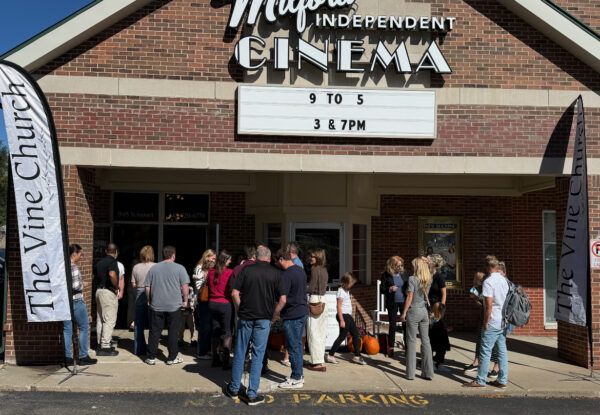
Getting settled, raising money, casting vision for a new church, and recruiting people to be part of that church isn’t easy. Mitch explained, “Building a launch team is one of the hardest things I’ve ever done in my life… and I’ve done some hard things.”
Balancing bi-vocational life—delivering dumpsters early in the morning before turning his attention to church planting and ministry—Mitch embodies the tireless work ethic required to build something from scratch.

The Vine Church officially launched on October 11. Mitch will baptize his dad later this month.

To learn more about The Vine Church and stay connected with their story, visit thevinechurchmi.com.
STORY OF CALLING | one person’s call has a global impact

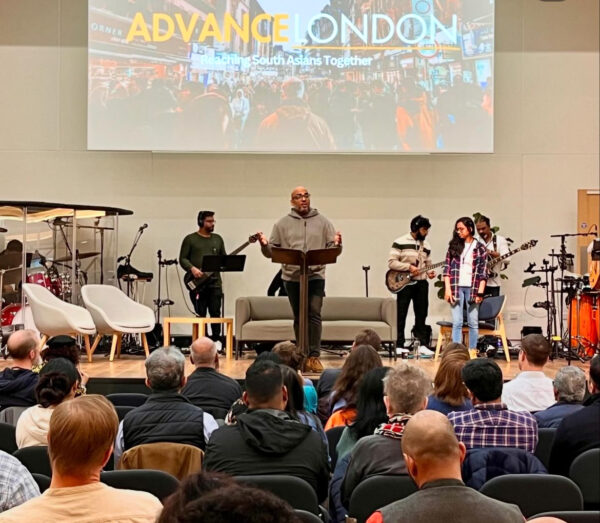
Ajay Thomas was part of Leaders Collective’s twentieth lead pastor cohort (2023-2024). He served as pastor at Seven Mile Road Church in Philadelphia until 2023 and is now the full-time executive director of the Advance Initiative. This is a bit of his story.

About twenty-five years ago, I was attending a worship service on a Sunday morning at Loudonville Community Church in Albany, NY. Only, I couldn’t sing. I was at my favorite church in college, about to hear my favorite preacher, and I couldn’t open my mouth. I stood overwhelmed as I thought about my South Asian peers. I was burdened by these questions: When are they going to get to sing the songs that I’m singing? When are they going to hear the gospel I’m about to hear?

I wouldn’t have known what to call that burden or that moment then, but looking back, I think it was the seedling of my calling. Over time, God nurtured that seedling and in 2009, it blossomed into planting Seven Mile Road Church in Philadelphia. Our dream was to plant a church that could reach South Asians and yet be multiethnic at the same time. Today, we celebrate that God made that dream a reality. But it was just the start.

The reality is that every fourth person on the planet is South Asian. Yet as the least reached peoples, more than anyone else, South Asians have missed out on the good news of Jesus Christ. But, South Asians are also the largest diaspora group in the world. That means that God has sovereignly scattered the least reached to places like Nairobi and New York, Dubai and Dallas, Melbourne and Memphis, where they can be reached, and in turn, reach others as well. Imagine the impact if South Asians were reached with the love of Christ and became a global missional force!

We believe that God has a role for South Asians to play in the global advance of the gospel and so we launched The Advance Initiative (advanceinitiative.org). Our mission is to catalyze a global movement of gospel-centered, multiethnic churches planted by or among South Asians. Let me tell you what that means and why that matters by telling you about Boto.
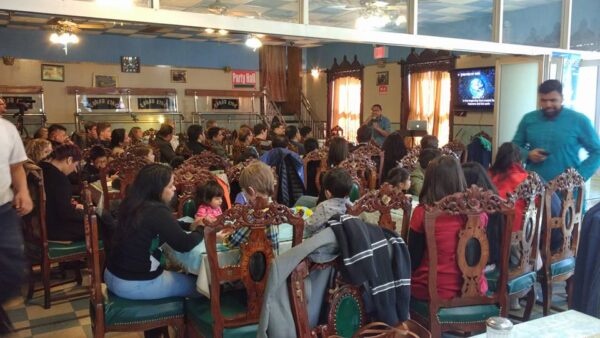
Boto Joseph planted Jackson Heights Community Church (JHCC) in Queens, NY. The New York Times once described Jackson Heights as the world’s most diverse neighborhood. For example, if you go to the local Wendy’s, you’ll find that the menu is not written in English, but in four South Asian languages. But if you go to Jackson Heights, every Sunday you’ll also find JHCC gathering on the third floor of a Muslim-owned restaurant named Kebab King.

JHCC has baptized former Hindus, Muslims, and Buddhists, among others. What’s amazing to me about JHCC and Boto is that Boto’s family came to faith generations ago because missionaries from New York came to Nagaland, his home state in India. And now, in God’s unfolding story, it’s a missionary from Nagaland that is reaching people in New York!

It’s not just Boto. I could tell you about my friend Jason who planted New Hope Church in Harlem, NY, or about Isaac planting Center Church in Dubai. I could tell you about Sujith who immigrated from India to the US pursuing the American dream, only to leave it all and go back to plant Cornerstone Church in Mumbai pursuing an even better dream. It’s for stories like these, and to see countless more, that Advance exists.
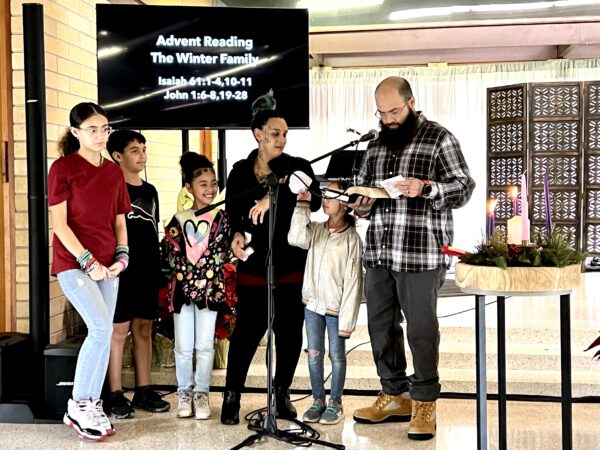
So our work is to expose people to the gospel opportunity among South Asians, provide spaces for believers to explore their sense of calling, equip leaders to plant as or among South Asians, and empower pioneers to plant. And all of that is ultimately to advance the gospel, by planting churches, all around the world!

To that end, we would love for you to partner and pray with us. Would you pray Luke 10:2 and Psalm 90:17 for us? We need the Lord of the harvest to raise up more laborers, specifically even for Him to raise up South Asian church planters all around the world. And please intercede for us that God would have favor on our ministry and establish the work of our hands!

STORY OF SERVICE | a simple relationship becomes a ministry

Brian MacDonald was part of Leaders Collective’s eleventh church planter cohort. He pastors Oak City Church in Bartow, Florida. This is a bit of his story.

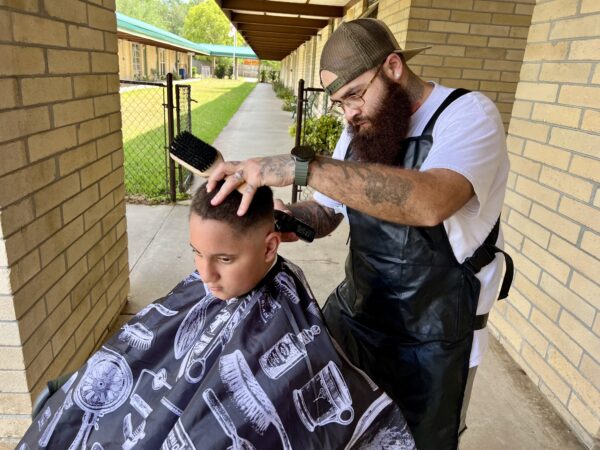
Nearly four years ago, I sat down in an ordinary barber’s chair, greeted by a big smile and a tattoo-covered hand. As he worked his magic on my ministry-tested white hair, Jovon did what every effective barber does, he asked questions: What did I do for a living? What was I interested in? Did I have a family? How I answered the first question would be telling. Would he politely shut down the conversation to avoid the awkwardness some people feel around pastors, or would he lean in with interest?

Thankfully, he leaned in. He shared about his dad, who is a pastor in the area, yet it quickly became clear their relationship was strained and that his family of eight had not been to church in some time. Later he admitted that their biggest obstacle was not theology or schedule but the stares. People did not know what to do with his head to-toe ink or with his wife’s face tattoos, which she often tried to hide beneath her curly hair.

With each subsequent haircut, I learned more about Jovon and his dreams. He and his wife, Rose, had been collecting used clothes in their shed, hoping they would one day find a place and platform to give back to their community. That was where our hearts connected. I told him about our church’s value of cultivating a “culture of care,” a commitment not only to shepherd within our church but also to serve those outside its walls. Eventually I handed Jovon our church invite card. Although he responded with enthusiastic appreciation, he never came. Still, I kept going back to have him cut my hair, and we continued our relationship, dreaming together about ways to love the poor in Bartow as he mastered his craft. Then came September 2023.

As we prepared to launch our Sunday morning services, we mailed more than 11,000 invitations to every home in the 33830 zip code, including the home of Jovon and Rose Winters. Something in Rose compelled her to scan the QR code, leading to our website, instead of simply tossing the bulk mail in the recycle bin. When Jovon came home, she showed him the site, and he took one look at my staff picture and laughed. He told Rose that I was one of his clients who had been inviting him to church for the past year. He later told me it was a sign from God, leading them to show up for worship a week before our launch, and they have barely missed a Sunday since.

Over the past two years, meeting with Jovon each Wednesday, I have come to believe he has been truly converted. God has given him a new heart and renewed the dream he carried for years. One year ago, our church helped launch a mobile shower and laundry trailer in partnership with a local mercy ministry. Twice a month, Jovon serves homeless men, women, and children there with the same detail and dignity he brings to every haircut he has ever given me. And the clothes he and Rose collected for years? Those are also long gone now…given out joyfully, as Jovon has led two FREE rummage sales on our church property!

STORY OF COMMUNITY | the gospel bringing people from different worlds together

Jonathan Davis was part of Leaders Collective’s eighth church planter cohort. He joined while preparing to launch a church in Greenville, South Carolina. This is a bit of his story.

Resurrection Greenville Story for Leaders Collective We planted Resurrection on the eastern-edge of downtown Greenville, South Carolina in April of 2021. Our heart was to see God do a new work at the crossroads of a few very different neighborhoods, each of which had a distinct and historic identity, yet never crossed paths with each other. We believed the gospel of Jesus Christ could bring these different people and neighborhoods together.

We had no idea if this was possible or what it would look like, but three years in, God has given us a glimpse of the power of the gospel through Steve and Alex.
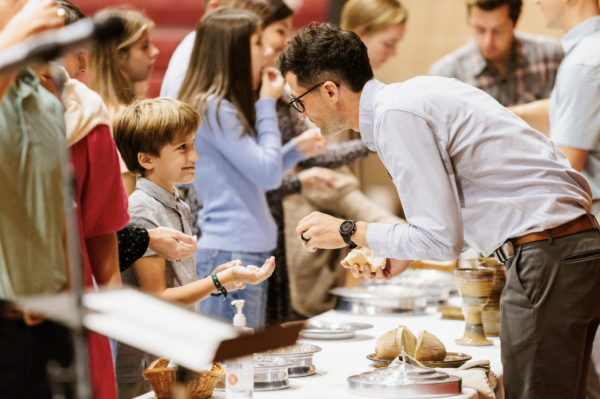
Steve grew up in a well-off but broken home. Addiction and divorce plagued his family. He tried to escape the pain through the party scene in college, but it didn’t do the trick. He was a promising accounting student who got recruited to a top accounting firm in Greenville by one of our church members, Kevin. Kevin took Steve under his wing both at work and socially. Soon enough, Steve began attending worship at Resurrection in the gym of the community center. Over the course of the next year, through Kevin’s friendship, the welcome of our church family, and the preaching of the Word, Steve came to faith in Christ. It has been an unspeakable joy to watch the Lord transform Steve’s life. Today, Steve serves on our music team and helps out with our youth group.

Alex arrived at Resurrection in a very different way. In his early 50s, in and out of prison and homelessness, Alex was walking by the community center one Sunday before worship when one of our more bold church members called out to him and invited him to join us for church. Surprisingly, Alex agreed. His first Sunday he sat in the back of the gym. We were able to chat briefly after the service. I was sure I’d never see him again, but he came back the next week…and the next week. Alex continued to sit in the back of the gym, so I told him (insisted) one day, “sit up here with the rest of us, you’re a part of us.” This began a beautiful and complicated relationship with Alex that has included giving him a Bible and spiritual counsel, providing funds to help meet practical needs, serving as references to get him off the street and into an apartment, and most recently, weekly visits to his jail cell. While we’ve seen the Holy Spirit doing good work in Alex, he continues to find himself in and out of trouble. And maybe most interestingly, some of God’s most pointed work yet has happened during these past three months of his incarceration. During our visits he talks about how he’s never read the Bible or prayed like he has recently, that he’s never been humbled like this, and that he can’t wait to get back to his church family when he gets out of jail.

To have Steve and Alex sitting in the same row of foldout chairs in the gym for worship each Sunday is the reason we planted Resurrection. Praise God for his kindness in allowing us to be a part of the new work he’s doing here. Please pray that God continues to do this work in our surrounding neighborhoods. Pray that we’d be faithful to minister to both the up-and-coming and the down-and-out.

STORY OF REDEMPTION | a journey from brokenness to hope in Jesus

Michael Johnson was part of Leaders Collective’s sixth church planter cohort. He joined while preparing to launch a church in Rantoul, Illinois. This is a bit of his story.

After falling in love with an often overlooked community, our family moved to Rantoul, Illinois, in October of 2018. We started a Bible study with a few families in town, but since I had never pastored or planted a church before, I felt like I didn’t measure up to the other church planters in my Leaders Collective cohort. I soon found out not even a global pandemic could stop what God was doing in our small town: In the fall of 2020, we launched Rantoul Community Church (RCC).

We started RCC in a forgotten place for forgotten people. People like Michael, whose incredibly difficult circumstances left him feeling on the margins of society. At just 23 years old, Michael lost two of his three kids in a house fire and ended up with burns over 70% of his body while trying to save his boys. Before Michael even left the hospital, his fiancé informed him that she was leaving him and taking with her their surviving daughter. After months of surgeries and therapy, Michael was released from the hospital, but he soon turned to drugs and one failed relationship after another to numb the pain.

Looking for a fresh start, Michael moved to Rantoul two years ago. I came across a post of his online, expressing an interest in meeting new people and finding a church, so I messaged him directly. Over coffee, Michael opened up about the fire and his fiancé—and the changes these events had on his life. I invited him to join us on Sundays, and he began attending our worship gatherings and a community group sporadically. He soon befriended Scott, a big guy at our church with an even bigger heart. Scott found Michael transportation for his new job, but Michael’s destructive patterns ultimately caught up with him again—landing him a short stint in jail.

During Michael’s time in jail, Scott mailed him a Bible. As Michael began reading, he realized, “At my lowest, God found me and said that He is not done with me.” Although Scott and I had previously tried to get Michael into a Christ-centered residential treatment program in town, this time Michael himself took the initiative. He left prison and joined the “Jesus is the Way” Prison Ministry. Michael is not only sober now, he is a different man. He is a man who loves God’s Word, a man who is reaching out to reconcile past relationships. Michael is a man who is walking in faith and obedience. Recently, Michael shared his testimony with our church family, ending with these words:

“I never thought things could be like this for me, that I was too broken. But now I know different. If God can use me, he can do this for anyone.”

Please join me in praying for more stories like Michael’s. Pray that many more people who feel forgotten and overlooked would find their way into God’s story. Pray that the single moms and the fatherless drawn to the streets of Rantoul would see Jesus and find a family at RCC. Pray also for our leaders as we seek to grow our elder team and shepherd this growing flock. As I seek to love and serve our church family, pray also for me, that I would consistently care for my wife and four kids sacrificially. Pray that the community of Rantoul would be transformed by Jesus as our loving church family makes his grace known in our words and actions.

STORIES OF HOPE | after hurricane helene

Billy Glosson was part of Leaders Collective’s fifth church planter cohort (2018-2019). He joined the cohort as part of his ongoing development and preparation to plant a church in Western North Carolina. Billy is currently part of Leaders Collective’s twenty-fourth lead pastor cohort. This is a bit of his story.

Six years ago, my wife and I packed our bags and moved from mid-Missouri to my hometown of Morganton, NC. We came with a simple mission: to plant a gospel-centered church in the growing rural South. It wasn’t long before we felt the weight of that calling. Church planting is tough, and starting in March of 2020 (yes, right before the pandemic) was even tougher. Between navigating a global pandemic and the pushback from cultural easy-believism and rejection of Christianity, it felt like our efforts were just a trickle against the rushing torrent of brokenness. But we held fast, knowing that God does not despise the day of small things. Little by little, we grew. Eventually, we saw His kindness when another local church merged with us, gifting us their building. It was an unexpected and gracious provision.

In the middle of this grind, an old high school friend reached out wanting to catch up. He co-hosted a popular local podcast that often took local pastors to task, and he was an outspoken atheist. Our conversations stretched over months of coffee meetups, but slowly, he softened. One night, in the midst of a personal crisis, he reached out, his life in turmoil. He felt like there might be something to this Jesus I spoke of. That night, he turned to the scriptures, and he became a Christian; God brought him from death to life. A few weeks later, I had the incredible joy of baptizing him, celebrating his new birth in Christ.

The Impact of Hurricane Helene

Mission Church had just started to feel settled. We had installed our first elders, and it felt like we were finally getting our footing. Then, on September 27, Hurricane Helene walloped Western North Carolina. The river basin in Morganton broke, flooding neighborhoods, wiping out businesses, and leaving the town without power or water for days. Downed trees and power lines littered the streets, but the hardest part was the silence. Communication was nearly impossible. Cell service was down, and the only news we received came through word of mouth. It wasn’t until days later, when I left town to shower, that I saw the destruction in places like Chimney Rock and Asheville. The devastation was staggering—I remember sitting in my car, overwhelmed and weeping.

In the aftermath, we didn’t know what to do since communication was still spotty. I drove to our building that Saturday to try and figure out a way to hold some kind of Sunday gathering. When I arrived, I was shocked—our building had power, miraculously, even with downed trees all around. That Sunday morning was one of the sweetest gatherings I’ve ever been a part of. People were weeping and hugging, checking on each other. Handwritten directions to homes with pools were passed around so people could flush toilets. We didn’t have open grocery stores, cell service, or running water, but we had power and a place to gather. For the next several days, we opened the building in the morning, providing lunch, a place to charge phones, and some sense of routine for kids and parents. We opened again in the afternoon and handed out water and other essential supplies to our community. Those days were long and heavy, but they were filled with the sweetness of community and God’s provision.

How to Help

Many have asked how they can help. We are overwhelmed by the kindness of churches across the country. Our building is full of needed supplies, but if you want to help specifically, give to local churches that were most heavily impacted, like those in Spruce Pine and Asheville. Most significantly, we ask for prayer. Never before have I seen so much favor for the church in this area. People have been overwhelmed by the response of local churches in the midst of this crisis. Pray that we can walk through this door of opportunity and see many come from death to life.